Peer Review
The Florida Dental Association offers an alternative to costly litigation in resolving complaints between a patient and dentist. Peer Review is the principal quality assurance mechanism through which the dental profession evaluates the appropriateness of treatment and the quality of care rendered by its members. Impartial clinical assessments by qualified peers provide the basis for its credibility. There is no charge to either party and the process is confidential.
Please contact the Florida Dental Association at 850-681-3629 for more information.
How Peer Review Works
The Peer Review program is designed to help FDA member dentists avoid costly legal fees, malpractice suits and BOD complaints by using this free service, exclusively for members.
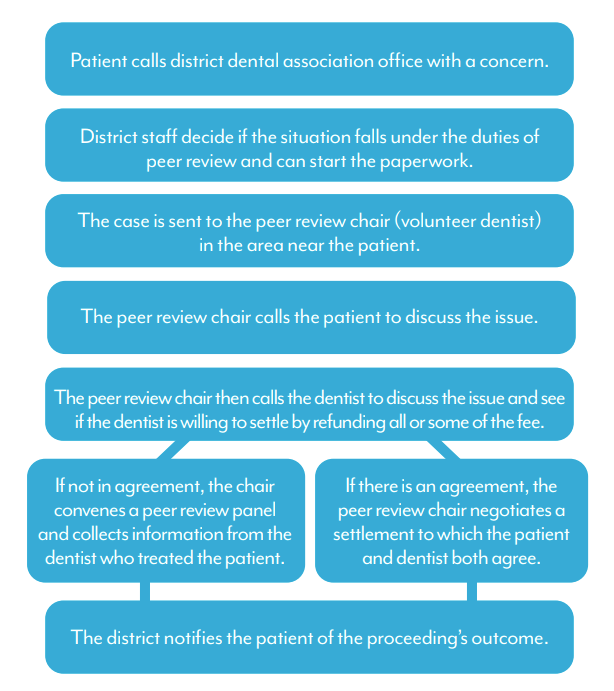
*Only cases involving problems with actual treatment and procedures are eligible for mediation. Cases not eligible for peer review include: malpractice litigation; formal regulatory investigations; disputes over dental fees; treatment that occurred more than 12 months before the patients last appointment with the dentists; cases involving nonmember dentists.
Section 466.022(1), Florida Statutes, states (among other things) that “a professional organization or association of dentists which sponsors, sanctions, or otherwise operates or participates in peer review activities is hereby afforded the same privileges and immunities afforded to any member of a duly constituted medical review committee by s. 766.101(3).” Section 766.101(3)(a), Florida Statutes, provides that “[t]here shall be no monetary liability on the part of, and no cause of action for damages shall arise against, any member of a duly appointed medical review committee, or any health care provider furnishing any information, including information concerning the prescribing of substances listed in s. 893.03(2), to such committee, or any person, including any person acting as a witness, incident reporter to, or investigator for, a medical review committee, for any act or proceeding undertaken or performed within the scope of the functions of any such committee if the committee member or health care provider acts without intentional fraud.” These statutory protections are intended to encourage good faith participation in the peer review process without fear of liability.
However, it is important to remember that records generated in the peer review process may be subject to disclosure in response to a subpoena or other legal process, and the original records (patient’s chart and dental records) and underlying facts of a matter submitted to peer review are almost always discoverable.